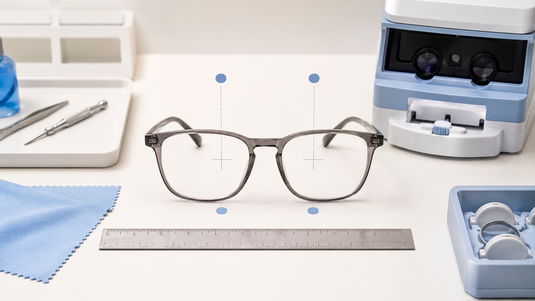
Buying glasses online can be convenient and affordable, but the best result comes from choosing the frame and lenses in the right order. Before looking at colours or trends, collect three essentials: a current eyeglass prescription, your pupillary distance (PD), and the measurements from a frame that already fits well. This practical guide explains what to check before placing an online order in Canada.
1. Start with a current prescription
An eyeglass prescription tells the lens maker how much correction each eye needs. Confirm that the prescription is for eyeglasses—not contact lenses—and that every value is readable. If it has expired, your vision has changed, or you are having headaches, blur, flashes, floaters, eye pain or sudden vision changes, arrange an eye examination before ordering.
2. Record your PD
PD is the distance between the centres of your pupils, measured in millimetres. It helps position the optical centre of each lens in front of your eyes. Your eye-care provider may supply one binocular number or two monocular numbers. Do not guess: use the value supplied by a professional or follow the retailer’s measurement instructions carefully.
3. Use a well-fitting frame as your reference
Most frames show three measurements inside a temple arm: lens width, bridge width and temple length. Compare those numbers with a pair you already find comfortable. A few millimetres can noticeably change how a frame sits, so treat measurements as a starting point—not a universal sizing system.
4. Choose a frame for fit first, style second
The frame should feel secure without pinching the temples, sliding down the nose or touching your cheeks. Lens depth also matters if you need progressive lenses. Once the fit range is clear, explore shapes such as round glasses, square glasses, rectangle glasses and cat-eye glasses. Colour choices like black, clear and tortoise shell are easier to compare after sizing is settled.
5. Match the lenses to how you use your glasses
Single-vision lenses usually correct one viewing distance. Bifocals contain distinct distance and near zones, while progressives provide a gradual change between distance, intermediate and near vision. Lens material, index and coatings may affect thickness, weight, reflections and durability. Choose features that solve a real need rather than adding every available option.
6. Check the retailer before checkout
- Read the return, remake and warranty terms.
- Confirm the frame, lens and coating details shown in the cart.
- Check shipping times and whether duties or taxes apply.
- Save a copy of the order and prescription entered.
- Review how adjustments are handled after delivery.
When your glasses arrive
Check that the frame sits level, the temples feel even and the lenses are free from damage. New prescriptions—especially progressive lenses—can require an adaptation period, but persistent blur, distortion, dizziness or discomfort deserves professional attention. Browse all glasses after you have your prescription and fit details ready.
Frequently asked questions
Can I use my contact lens prescription?
No. Contact lens and eyeglass prescriptions are not interchangeable.
Should I choose the cheapest lens?
Price alone is not enough. Match the lens design, material and coatings to your prescription and daily use.
What if I am between two frame sizes?
Compare bridge fit, total frame width and temple length with a comfortable existing pair, then review the store’s return policy.
This guide provides general information and does not replace advice from an optometrist or other qualified eye-care professional.