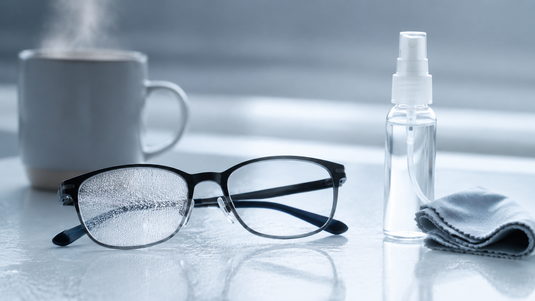
Glasses fog when warm, moisture-laden air reaches a cooler lens and condenses into tiny droplets. It commonly happens when moving indoors from cold Canadian weather, cooking, exercising or wearing face coverings. The goal is to reduce warm airflow toward the lenses and help the lens surface resist condensation without harming its coatings.
Clean the lenses first
Oil, dust and residue give moisture more places to collect. Rinse the glasses with lukewarm water, clean them with a product approved for your lenses and dry them using a clean optical microfibre cloth. Avoid aggressive household cleaners and rough paper products.
Improve airflow around the frame
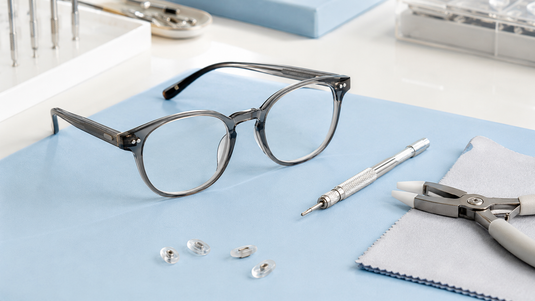
A frame sitting extremely close to the face may trap warm air. A professional adjustment can sometimes change nose-pad position, frame height or tilt to improve airflow while preserving optical alignment. Do not bend the frame at home, especially when wearing progressive or strong prescription lenses.
Fit face coverings carefully
When a mask or winter face covering is required, shape its upper edge closely over the nose and cheeks so exhaled air is directed outward rather than up toward the lenses. Place the glasses securely above the top edge only if this feels stable and does not disturb vision. Follow the covering manufacturer’s instructions and do not compromise its intended seal or protection.
Use lens-compatible anti-fog products
Anti-fog sprays, wipes and treated cloths can reduce condensation when they are approved for your lens material and coatings. Apply only as directed. Some swimming-goggle, automotive or household products are unsuitable for prescription eyewear. If you are unsure, ask the lens supplier before use. This ZEISS fogging and lens-cleaning guide also recommends optical lens-cleaning products and microfibre cloths.
Avoid unreliable household remedies
- Do not use toothpaste or abrasive cleaners.
- Do not apply shaving foam unless the lens supplier specifically approves it.
- Do not use saliva.
- Do not coat lenses with oil, wax or household glass treatment.
- Do not rinse with very hot water.
These methods may leave residue, damage coatings or reduce clear vision.
Cold-weather routine
- Keep a clean microfibre cloth in a dry case.
- Before entering a warm building, reduce sudden temperature change where practical.
- Allow lenses to clear naturally, then clean remaining droplets safely.
- Keep vents and airflow paths open when using protective goggles.
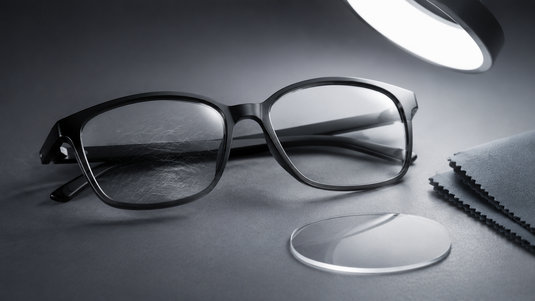
- Replace badly scratched or coating-damaged lenses, which can scatter light.
When fogging is a safety issue
If vision fogs during driving, cycling, work or sport, stop in a safe place and clear the lenses before continuing. Never continue a safety-sensitive activity with obstructed vision. Protective eyewear must meet the requirements of the activity; ordinary prescription glasses are not a substitute for certified safety eyewear.
Frequently asked questions
Does dish soap prevent fogging?
Some advice suggests leaving a soap film, but residues can affect coatings and clarity. Use only the cleaning method approved for your lenses.
Will anti-reflective coating stop fog?
Anti-reflective and anti-fog treatments serve different purposes. Check the exact lens specification.
Why do my glasses fog only in winter?
Moving from cold outdoor air into warm humid air creates a large temperature difference, encouraging condensation on cold lenses.
When choosing a replacement frame, compare fit and lens spacing across all glasses.
This article provides general eyewear-care information. Follow the instructions supplied with your lenses and consult an optician when fit, damage or vision is uncertain.