Face-shape advice can be a useful starting point, but it is not a rulebook. The most flattering glasses are the pair that fits your bridge, works with your prescription and feels like your style. Instead of forcing your face into one category, look at overall proportions, angles and where the frame sits.
How to identify your general face shape
Pull hair away from the face and look straight ahead in even lighting. Compare forehead width, cheekbone width, jaw width and face length. Many people are a blend of two shapes, which is completely normal.
Round faces
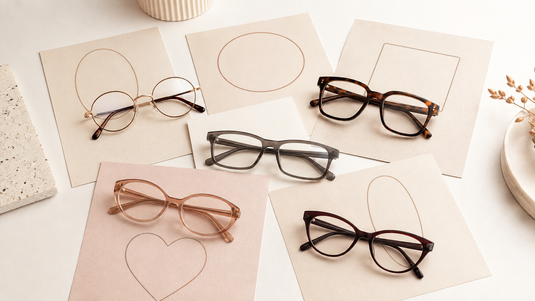
Round faces often have soft curves and similar width and length. Angular frames can introduce definition. Try square glasses, rectangle glasses or a structured browline frame. If you prefer round glasses, choose them confidently—the fit and scale matter more than a styling formula.
Square faces
Square faces often have a broad forehead and defined jaw. Curved shapes can balance those angles, including round and oval glasses. A thin rim or softer colour can make the effect lighter, while a bold rectangular frame emphasizes structure.
Oval faces
Oval faces are usually longer than they are wide, with balanced proportions. Many shapes can work, so focus on width: the frame should generally relate comfortably to the broadest part of the face. Oversized styles can be dramatic, while medium-depth frames feel more understated.
Heart-shaped faces
A heart-shaped face is often wider near the forehead and narrower at the chin. Frames with visual interest toward the outer corners, such as cat-eye glasses, can complement this shape. Light rims, rounded bottoms and balanced bridge placement are also worth trying.
Oblong or rectangular faces
Longer faces can be balanced by frames with greater lens depth, a defined brow or noticeable colour. Deep round, square and browline styles may visually shorten the face. Very narrow, shallow frames can emphasize length.
Fit checks that matter more than face shape
- The bridge sits securely without leaving uncomfortable pressure.
- The frame width is neither squeezing nor sliding.
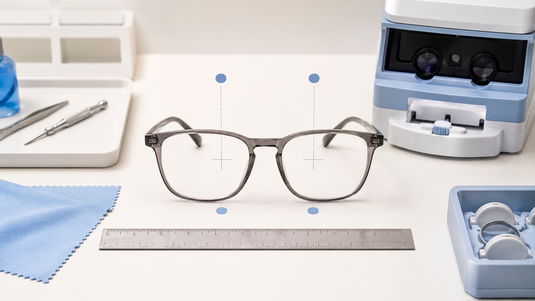
- Your pupils sit in a sensible position within the lenses.
- Your cheeks and eyelashes do not push the frame.
- The lens shape works with your prescription and intended lens design.
Use colour and material to refine the look
Black glasses create strong contrast, clear frames feel lighter, and tortoise shell glasses add warm pattern. A rimless frame keeps the look minimal. Choose the combination you will actually enjoy wearing.
Frequently asked questions
Must I avoid round glasses on a round face?
No. Proportion, frame width and personal style matter more than a strict contrast rule.
Which frame makes a face look slimmer?
Angular lines and slightly upswept outer corners may create definition, but proper scale and fit have the strongest effect.
Can my prescription limit frame choice?
Yes. Stronger or multifocal prescriptions can work better in certain sizes and depths. Ask an optical professional before ordering.
This guide provides general information and does not replace advice from an optometrist or other qualified eye-care professional.