Frame measurements make online glasses shopping much easier when you know what they describe. The familiar three-number sequence—often printed inside a temple arm—usually represents lens width, bridge width and temple length in millimetres. These figures are useful, but they do not describe every part of fit.
The three standard measurements
Lens width
Lens width is the horizontal width of one lens at its widest point. A larger number generally means a wider lens, but the overall frame can still differ because of hinge, rim and bridge design.
Bridge width
Bridge width describes the space between the lenses at the bridge. It affects how the frame rests on the nose. Two frames with the same printed bridge number may fit differently when one has adjustable nose pads and the other has a moulded plastic bridge.
Temple length
Temple length is measured along the arm from the hinge toward the tip. The arms should reach comfortably over and behind the ears without pressing or leaving the frame loose.
Measurements that may not be printed
Total frame width is the outside-to-outside width of the front. It is one of the most helpful comparisons when shopping online. Lens height matters for appearance and for multifocal fitting. The location of the hinges, end pieces and nose pads also changes how a frame sits.
How to measure a frame you already own
- Choose a pair that stays level and feels comfortable for several hours.
- Read the three numbers printed inside the arm, if visible.
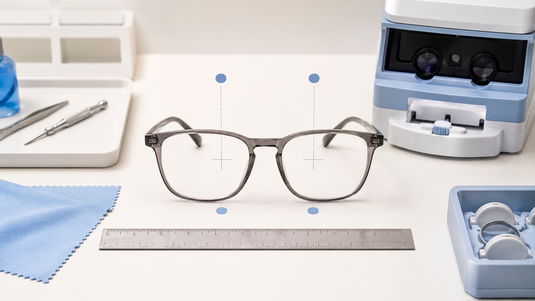
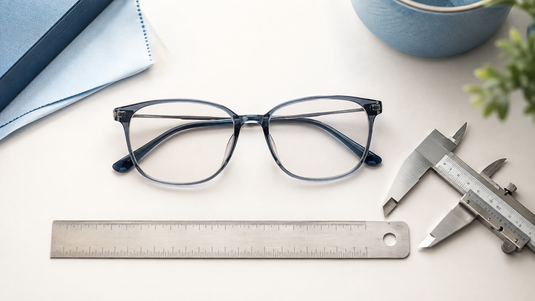
- Place the frame on a flat surface and use a millimetre ruler.
- Measure the total front width from the widest outer points.
- Measure lens height vertically at the deepest part of the lens opening.
- Record the bridge style and whether the frame has adjustable nose pads.
Measure twice and avoid bending the frame. If the printed numbers are worn away, an optician can measure the frame accurately.
Fit signs to look for
- Your pupils appear reasonably centred in the lenses.
- The frame does not slide when you look down.
- The bridge feels secure without pinching.
- The temples do not press firmly into the sides of your head.
- The lower rims do not lift when you smile.
- Your eyelashes do not brush the lenses.
Shape changes the fit
A round frame and a rectangle frame can share the same lens width but feel very different. Deep lenses, thick rims and curved end pieces all affect overall size. Compare several dimensions rather than searching for one “perfect” number. You can use the filters in all glasses to narrow your choices after establishing a comfortable size range.
Frequently asked questions
Are frame sizes standardized?
The measurement method is broadly consistent, but fit can vary between designs and materials.
How much difference does 2 mm make?
It can be noticeable at the bridge or total width. Compare the full set of dimensions and the frame construction.
Can a frame be adjusted?
Many frames can be adjusted by a trained optician, but adjustment cannot correct a fundamentally unsuitable size or bridge design.
This guide provides general information and does not replace advice from an optometrist or other qualified eye-care professional.