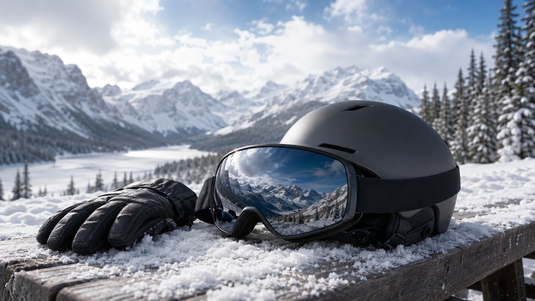
Ski goggles protect the eye area from wind, snow, glare and airborne ice while helping you see terrain changes. The best pair is the one that fits your helmet and face, stays clear, and uses a lens suited to the day’s light. Canadian mountain conditions can shift quickly, so versatility matters.
Start with helmet compatibility
Try the goggles with the helmet you plan to wear. The upper edge should meet the helmet without a large exposed gap, and the helmet should not push the goggles down onto the nose. The strap must be long enough to sit securely around the helmet, with the adjustment hardware away from pressure points.
Check the seal and field of view
Foam should contact evenly around the face without painful pressure or air gaps. The nose area must allow easy breathing. Look straight ahead and to both sides to confirm that the frame does not create distracting blind spots. Larger lenses may improve peripheral vision, but fit is more important than size alone.
Understand visible light transmission
Visible light transmission (VLT) describes how much visible light passes through the lens. A higher VLT lens is generally useful in flat light, snowfall or overcast conditions; a lower VLT lens reduces brightness on sunny days. Because brand categories vary, compare the stated VLT range and intended weather rather than relying only on lens colour.
Plan for changing conditions
Interchangeable lenses can be helpful when morning clouds turn into strong afternoon sun. If you prefer one lens, look for a versatile mid-range option suited to the conditions you ski most. Always confirm the goggles’ stated UV protection; snow can strongly reflect UV even when the air feels cold. Canada’s UV guidance notes that fresh white snow can reflect a large amount of ultraviolet radiation.
Reduce fogging
- Keep top and bottom vents clear of snow.
- Avoid wiping the inner lens, especially when wet.
- Let goggles dry fully at room temperature.
- Do not place them lens-down on rough surfaces.
- Store them in a breathable pouch after drying.
- Avoid overdressing, which can send excess heat and moisture upward.
Prescription options
Some goggles are designed to fit over glasses, often called OTG goggles. Check both the goggle dimensions and ventilation when combining them. Prescription inserts are another option. An optical professional can advise which solution is appropriate and whether the glasses underneath are suitable for sport use.
Ski goggle checklist
- Even face seal and easy breathing
- Secure helmet fit
- Wide, undistorted field of view
- Lens VLT suited to typical conditions
- Verified UV protection
- Working ventilation and intact anti-fog treatment
- Spare lens or backup goggles for changing weather
Frequently asked questions
Is a darker lens always better on snow?
No. Dark lenses suit bright sun but can hide terrain detail in flat light. Match VLT to conditions.
Can I use regular sunglasses instead?
Sunglasses do not provide the same wind, snow and face coverage as properly fitted goggles.
Should ski goggles be airtight?
No. They should seal comfortably around the face while using vents to manage airflow and moisture.
This guide provides general information and does not replace advice from an optometrist or other qualified eye-care professional.