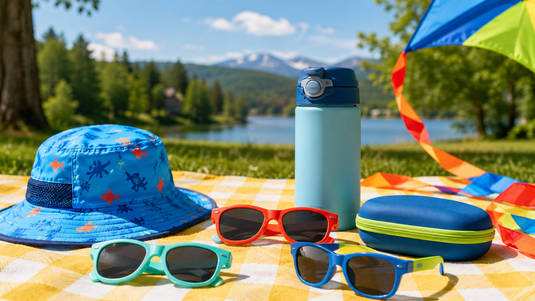
Children spend plenty of time outdoors, so sunglasses can be a useful part of sun protection. The priorities are simple: verified UVA and UVB protection, comfortable coverage, durable construction and a fit the child will keep on. Colour and character come after protection and comfort.
Look for stated UVA and UVB protection
Lens darkness alone does not tell you how much ultraviolet radiation is blocked. Choose products that clearly state protection from both UVA and UVB. Health Canada advises parents to include sunglasses in children’s sun protection during strong sunlight and to follow the UV Index. Review Canada’s UV Index and sun-safety guidance before outdoor activities.
Choose a child-sized fit
Adult sunglasses are usually too wide and may slide, tilt or leave large gaps. A good children’s frame rests comfortably on the nose, stays level and does not squeeze the temples. The arms should reach behind the ears without sharp pressure. Younger children may benefit from a soft retention strap used according to the product instructions.
Prioritize coverage without blocking vision
Lenses should cover the eye area well, including from above and the sides, while allowing a clear field of view. A hat with a brim provides additional shade. Sunglasses are one part of a broader plan that includes shade, suitable clothing, hydration and age-appropriate sunscreen.
Durability and lens safety
Kids’ eyewear should tolerate normal play. Flexible frames and impact-resistant lens materials can be practical, but ordinary sunglasses are not a replacement for sport-specific or certified protective eyewear. Check hinges, screws and lens edges regularly, and replace damaged glasses.
Let the child help choose
Children are more likely to wear sunglasses they find comfortable and attractive. Offer two or three parent-approved options and let them choose the colour. Build the habit by storing sunglasses with outdoor essentials and modelling consistent use as a family.
Kids sunglasses checklist
- Clear claim of UVA and UVB protection
- Child-sized bridge and temple fit
- Good eye-area coverage
- Comfortable, smooth edges
- Durable frame and lenses
- No scratches or loose components
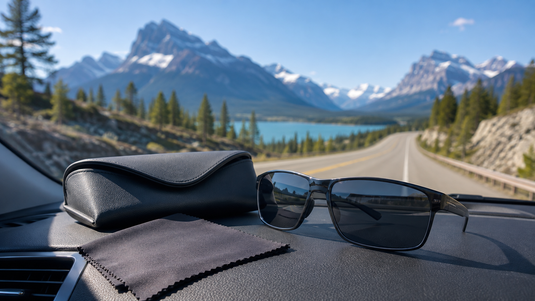
- A case or pouch for storage
When prescription lenses are needed
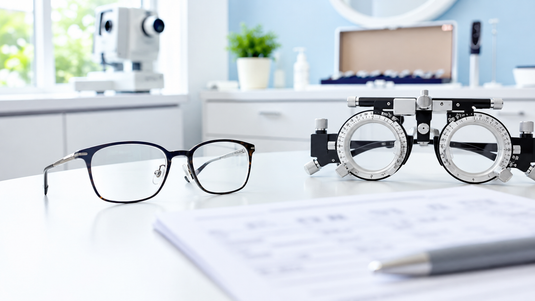
If a child needs vision correction, ask their optometrist about prescription sunglasses or UV-protective everyday lenses. Do not copy an old prescription or assume the same frame size still fits; children’s vision and facial measurements can change as they grow.
Frequently asked questions
Do children need sunglasses on cloudy days?
UV can still be present through cloud. Use the local UV Index and professional guidance rather than judging only by brightness.
Are darker lenses more protective?
Not necessarily. UV protection must be verified separately from visible tint darkness.
Can kids wear toy sunglasses?
Use eyewear sold as sun protection with stated UV performance. Novelty items without reliable specifications may not provide appropriate protection.
This guide provides general information and does not replace advice from an optometrist or other qualified eye-care professional.