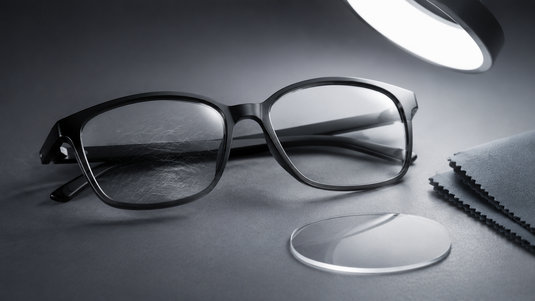
A scratch on prescription glasses is frustrating, especially when it sits near the centre of vision. Unfortunately, a true scratch is physical damage to the lens surface or coating. It cannot be safely “cleaned away,” and polishing a prescription lens changes material rather than restoring the original optical surface.
First confirm it is really a scratch
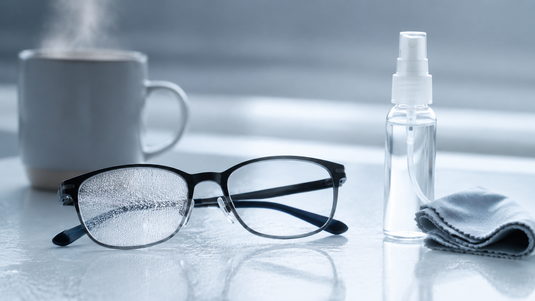
Fingerprints, dried droplets, hairspray and coating residue can resemble fine scratches. Rinse the lens with lukewarm water, use a lens-safe cleaner and dry it with a clean optical microfibre cloth. Inspect the lens under soft light. If the mark remains in the same position and catches light, it may be a scratch or coating damage.
Why home polishing is unsafe
Online remedies often recommend toothpaste, baking soda, metal polish, glass-etching products or abrasive compounds. These materials work by removing or roughening the surface. On prescription lenses, that can damage anti-reflective, hard, UV or other functional coatings and may affect optical quality. It may also create a cloudy patch larger than the original mark.
Professional lens-care guidance from ZEISS states that scratches cannot be removed from plastic or glass lenses. The dependable remedy for a genuinely scratched prescription lens is assessment and, when needed, replacement.
When scratches need attention
- The mark crosses the main line of sight.
- Light scatters around lamps or headlights.
- The lens appears cloudy or crazed.
- A coating is peeling, flaking or separating.
- Vision feels distorted or uncomfortable.
- The lens has a deep chip or crack.
Stop using cracked or loose lenses for driving, sport, machinery or other safety-sensitive tasks until an optical professional has assessed them.
Can only the lenses be replaced?
Often, new lenses can be fitted into an existing frame if the frame is compatible, in good condition and suitable for the prescription. An optician should inspect the rim, hinges and material first. Older, brittle or distorted frames may be at greater risk during lens fitting, making a complete replacement more practical.
How to prevent future scratches
- Rinse grit away before wiping.
- Use a clean optical microfibre cloth.
- Store glasses in a hard case.
- Never place them lens-down.
- Keep them away from pockets containing keys or coins.
- Avoid high heat that may damage coatings.
- Choose an appropriate scratch-resistant treatment, remembering no lens is scratch-proof.
Frequently asked questions
Does toothpaste remove lens scratches?
No safe optical-care method supports using toothpaste. Its abrasives can damage coatings and create haze.
Can an optician buff out the scratch?
Prescription lenses are generally replaced rather than polished because polishing can alter the optical surface.
Does a scratch-resistant coating prevent every scratch?
No. It improves durability but does not make the lens scratch-proof.
If replacement glasses are required, compare styles in all glasses after confirming your current prescription and measurements.
This article provides general eyewear-care information. Follow the instructions supplied with your lenses and consult an optician when fit, damage or vision is uncertain.