Glasses can become loose or uneven through daily wear, but adjustment is not simply a matter of bending the frame until it feels right. Frame material, hinge design, lens type and prescription all affect what can be changed safely. Minor checks can be done at home; structural adjustments are best handled by an optician.
First identify the problem
Place the glasses open on a flat surface and inspect them without forcing the temples. Look for a missing screw, bent hinge, cracked rim, loose lens, damaged nose pad or temple that no longer opens smoothly. Then consider how the frame feels when worn: is it sliding, pinching, sitting crooked or touching the cheeks?
Safe checks you can make
- Clean the bridge and nose pads, since skin oils can cause slipping.
- Confirm both temples open normally and no screw is visibly missing.
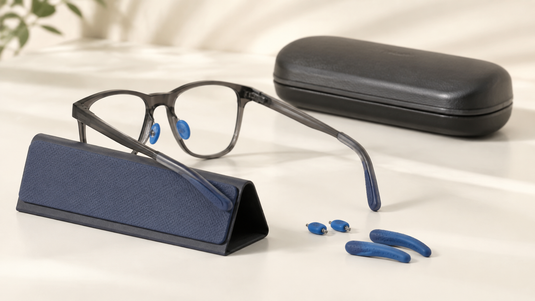
- Check that removable silicone accessories are positioned according to their instructions.
- Compare the current frame with a photo taken when it fitted correctly.
- Use the retailer’s adjustment or warranty service instead of forcing a change.
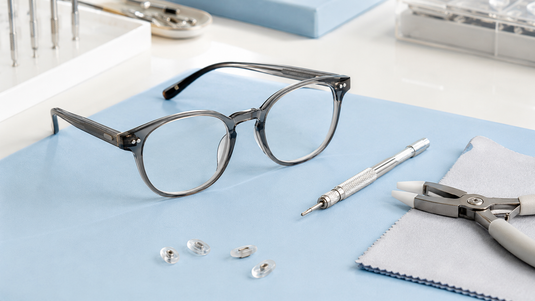
If a screw is only slightly loose and you have the correct optical screwdriver, gentle tightening may be possible. Stop as soon as it is secure; overtightening can strip the screw, damage the hinge or crack the frame.
Adjustments an optician should perform
Professional help is recommended when temples need bending, a metal bridge or nose-pad arm requires alignment, an acetate frame needs controlled heating, or a lens is loose. Opticians use material-specific heat, soft-jaw tools and alignment checks. Household pliers, boiling water, open flames and hair dryers can permanently damage frames and coatings.
Why prescription alignment matters
Frames hold prescription lenses in a planned position. Excessive tilt, uneven height or a shifted bridge may alter how you look through the lenses. This is particularly important with progressive, bifocal, prism or stronger prescriptions. If a frame suddenly feels wrong and vision is distorted, stop wearing it for demanding tasks such as driving until it has been checked.
Common fit problems
One lens sits higher
The frame may be twisted, one ear may be higher, or a nose pad may have moved. An optician should determine the cause rather than guessing which temple to bend.
The temples pinch
The frame may be too narrow or the temple bow may need adjustment. Repeatedly spreading the arms can weaken hinges.
The frame slides down
Cleaning may help, but persistent slipping usually points to bridge, temple or sizing issues. An optician can assess the most appropriate correction.
When replacement is better than adjustment
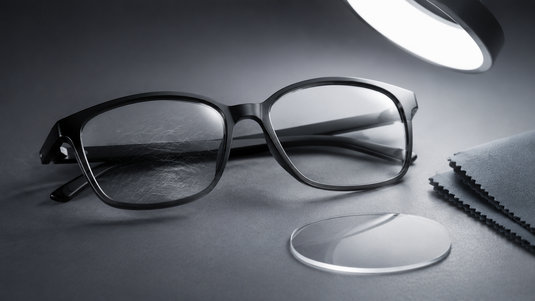
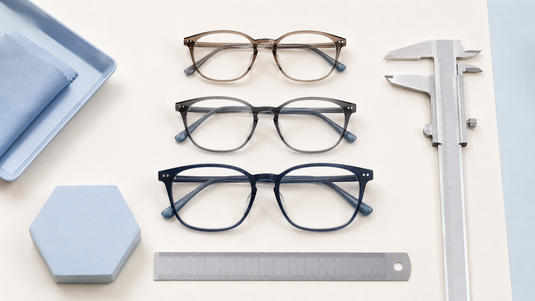
Cracked rims, deeply stressed hinges, repeated screw failures or badly distorted frames may not be dependable after repair. If the frame is fundamentally too small or too wide, adjustment has limits. Compare measurements before choosing a replacement from all glasses.
Frequently asked questions
Can I heat plastic frames in hot water?
It is not recommended. Temperature and material behaviour are difficult to control, and heat can damage both frame and lenses.
Can I use household pliers?
No. Unprotected tools can scratch, crush or snap frame components.
How often should glasses be adjusted?
There is no fixed schedule. Arrange an adjustment when comfort, alignment or security changes.
This article provides general eyewear-care information. Follow the instructions supplied with your lenses and consult an optician when fit, damage or vision is uncertain.